Related Posts

If your 18650 battery shows a torn wrapper, visible dents, excessive heat during charging, or won’t hold a charge, stop using it immediately. These are the most common signs of a compromised cell that can vent, catch fire, or explode. The quickest safety check takes five seconds: inspect the wrapper for any tears or exposed metal, then look for physical damage to the cell body. A single exposed metal edge can create a hard short in your pocket or device.
18650 lithium-ion cells power millions of vaping devices, flashlights, and electronics, but their high energy density comes with real risk when safety protocols break down. Unlike the protected battery packs in your phone or laptop, loose 18650 cells lack the circuitry that prevents overcharging, over-discharging, and short circuits. This puts the responsibility for safe operation entirely on you.
Most 18650 incidents trace back to four preventable causes: damaged wrappers creating shorts, using cells beyond their safe discharge limits, storing batteries loose with metal objects, and charging with incompatible equipment. Understanding which symptoms demand immediate disposal versus a simple rewrap can prevent both unnecessary waste and genuine hazards.
This guide walks through the symptom-first triage every vaper should perform, explains the root causes behind common battery failures, provides step-by-step fixes for salvageable issues like wrapper damage, and establishes prevention protocols that extend cell life while keeping you safe. We’ll cover when a 50-cent rewrap solves the problem and when you need to recycle the cell, no exceptions. Battery safety isn’t about fear; it’s about informed habits that become second nature.
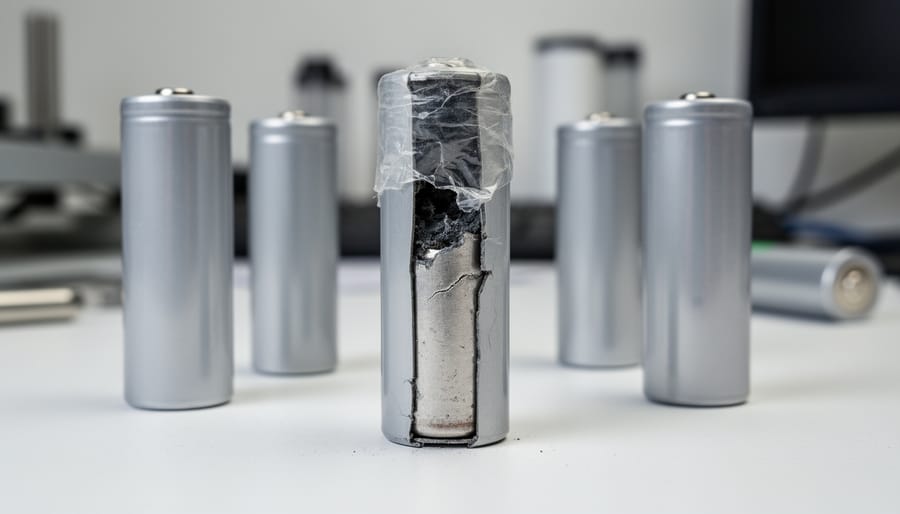
A damaged battery wrapper is the most common and dangerous visual defect you’ll encounter. Any tear, nick, or exposed metal beneath the wrap creates a potential short-circuit path. Even a tiny breach near the positive terminal can allow the metal casing (which forms the negative terminal) to contact conductive surfaces inside your device or charger. Inspect the entire wrapper under good lighting, rotating the battery slowly.
Dents and dings compromise the internal structure. A visible indentation suggests the separator between anode and cathode layers may be compressed or damaged, raising the risk of internal short circuits. Don’t assume a small dent is harmless, lithium-ion cells have minimal internal tolerance for deformation.
Terminal damage appears as scratches, corrosion, or flattening on the positive button top or negative flat end. Scratched terminals create inconsistent electrical contact and increase resistance, generating excess heat during discharge.
Battery swelling, where the cell becomes visibly fatter than its original 18mm diameter, indicates internal gas buildup from degradation or thermal runaway. A swollen battery is unstable and must be retired immediately.
Discoloration, particularly brown or black staining on the wrapper or around terminals, signals electrolyte leakage or overheating events. Either condition renders the battery unsafe for further use.
Beyond visible damage, your battery may signal trouble through how it performs. Pay attention to these functional red flags, they often precede complete failure.
Excessive heat is the most critical warning. If your battery becomes uncomfortably warm to touch during normal use (not just slightly warm), stop immediately. Batteries should remain near room temperature; anything hotter suggests internal resistance problems or a developing short circuit. Note that heat concentrated at one end differs from the mild warmth spread across the entire cell during heavy vaping.
Rapid voltage sag reveals declining capacity. When your device shows low battery after just a few hits, or power output noticeably drops mid-session despite a recent charge, the cell can’t deliver its rated current anymore. This often correlates with mesh coil failures or weak vapor production, but if swapping coils doesn’t help, suspect the battery.
Charging failures tell you plenty. A battery that won’t accept a full charge, charges suspiciously fast (under an hour for a 3000mAh cell), or triggers your charger’s error light has likely developed internal damage. Similarly, if your device won’t fire despite the battery showing charge, test with a known-good cell to isolate the problem.
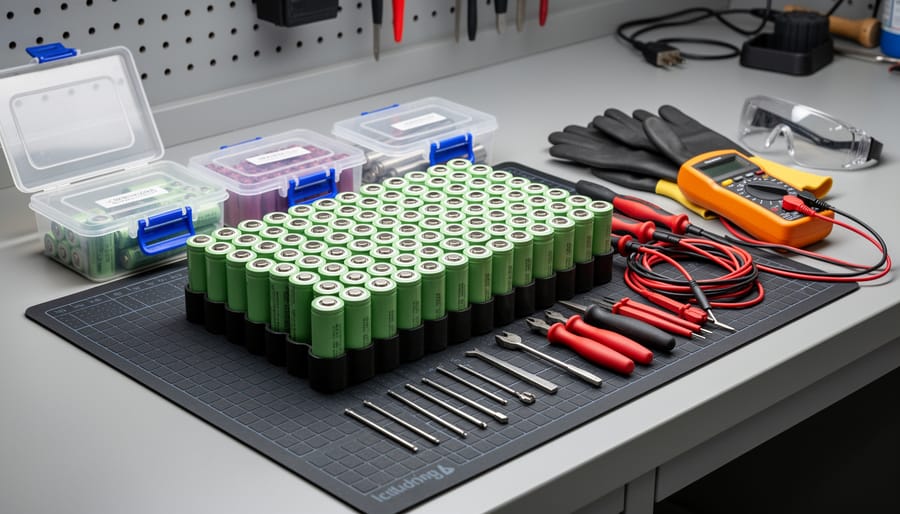
Drops and impacts can dent the metal casing beneath the wrapper, creating internal shorts between the positive and negative terminals. Even a small dent that doesn’t penetrate the wrapper may damage internal separators that prevent direct contact between electrodes. When these separators fail, the battery can enter thermal runaway within seconds.
The thin PVC wrapper serves as critical insulation. A torn wrapper exposes the negative terminal (the entire metal body except the positive top), allowing contact with any conductive surface. Carrying unwrapped batteries loose in pockets or bags with coins, keys, or other metal objects creates a direct short circuit path. This instantaneous discharge generates extreme heat, enough to cause burns or ignite pocket contents.
Scratches on the positive terminal or insulator ring compromise the protective barrier between terminals. The white insulator ring at the positive end is not decorative; removing it or allowing it to crack eliminates the last layer preventing shorts. Batteries with compromised terminals should never be inserted into devices, as the mod’s internal contact points may bridge the gap and trigger catastrophic failure.
Using the wrong charger is one of the fastest ways to compromise an 18650 cell. Generic USB chargers or adapters designed for other devices can’t manage the precise voltage and current requirements of lithium-ion cells. They may deliver inconsistent current, fail to terminate charging at 4.2V, or lack the trickle-charge phase that protects cell longevity. Always use a dedicated lithium-ion smart charger with individual bay monitoring.
Overcharging happens when a battery remains on the charger after reaching full capacity. While quality chargers should prevent this, leaving cells connected for hours beyond completion degrades the cathode, increases internal pressure, and accelerates capacity loss. Set a timer or charge during active hours when you can remove batteries promptly.
Charging unattended overnight or while away from home eliminates your ability to respond if a cell vents, overheats, or the charger malfunctions. The majority of battery-related fires occur during unsupervised charging sessions. Treat charging like cooking: stay nearby and check periodically.
Never attempt to charge a visibly damaged battery. Compromised wrappers, dented casings, or cells that previously overheated have unpredictable internal conditions. Charging such a cell can trigger thermal runaway. Dispose of damaged batteries immediately through proper recycling channels.
Temperature extremes pose serious risks to 18650 cell integrity. Exposing batteries to heat above 45°C (113°F) accelerates internal chemical degradation, while freezing temperatures below 0°C (32°F) can cause permanent capacity loss and increase internal resistance. Leaving batteries in hot cars, near radiators, or in direct sunlight creates thermal stress that weakens the separator membrane between anode and cathode.
Moisture exposure introduces conductivity risks and corrosion. Even ambient humidity in poorly sealed storage containers can oxidize terminals over time. Never store batteries in bathrooms, basements prone to dampness, or anywhere condensation might form.
Storing cells at full charge (4.2V) for extended periods degrades chemistry faster than keeping them at 40-60% capacity. If you won’t use a battery for weeks, charge it to roughly half and store in a cool, dry location.
Contact with conductive materials creates short-circuit hazards. Loose batteries rolling in drawers with coins, keys, or other metal objects can bridge positive and negative terminals instantly. Always use dedicated battery cases with individual slots. Stacking batteries without separators or storing them terminal-to-terminal invites catastrophic failure. Treat every cell as a potential short-circuit waiting to happen without proper isolation.
A damaged wrapper exposes the battery’s metal casing, turning your entire cell into a potential short-circuit hazard. Small tears (under 5mm) near the middle of the battery can often be temporarily covered with non-conductive electrical tape until you can properly rewrap, but any damage near the terminals or larger tears requires immediate rewrapping.
Tools and Materials You’ll Need:
Purchase pre-cut PVC heat-shrink wraps sized for 18650s (typically 72mm x 30mm sleeves). You’ll also need positive terminal insulators, the small plastic rings that sit atop the battery. A hairdryer works for home rewrapping, though a heat gun offers better control at lower temperatures.
Rewrapping Procedure:
Remove the old wrapper completely using your fingernail or a plastic tool, never use metal. Inspect the battery underneath for dents or corrosion; if you find either, retire the cell immediately rather than rewrapping.
Slide the new insulator over the positive terminal, ensuring it sits flat. Center the heat-shrink sleeve over the battery so equal material extends beyond both ends. Apply heat evenly while rotating the battery, starting from one end and working toward the other. The wrap will shrink tightly within 15-20 seconds. Avoid overheating, if the battery becomes uncomfortable to hold, you’ve applied too much heat.
Inspect the finished rewrap for complete coverage with no gaps at the terminals. Test-fit the battery in your device before use.
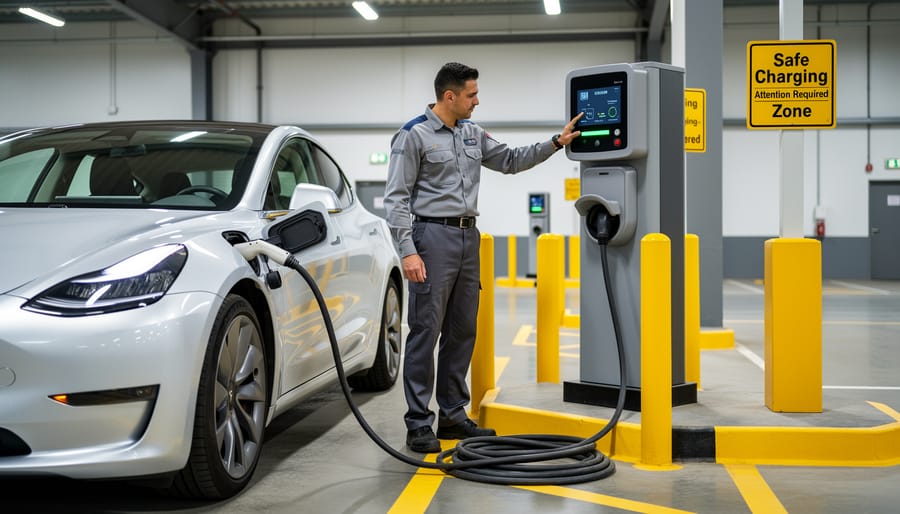
Start by isolating the problem source through controlled testing. Remove the suspect battery from your charger and test it in your device, if it powers the mod normally, the charger may be faulty. Conversely, try charging a known-good battery in the same charger slot. If the good battery charges without issue, your original cell likely has internal damage and should be retired.
Check charger functionality by inspecting the display for error codes and verifying that charging current matches the battery’s specifications. Most quality chargers show real-time voltage and charging rate. A cell that won’t accept charge or displays erratic voltage readings (jumping between values) has likely degraded beyond safe use. Similarly, batteries that reach 4.2V immediately without the expected charging curve indicate internal resistance problems.
For batteries that charge slowly or incompletely, perform a diagnostic cycle. Discharge the cell to around 3.2V through normal use, then charge fully while monitoring. If capacity has dropped below 80% of the rated mAh, measurable with chargers that display charged capacity, the battery has reached end-of-life regardless of charge cycle count.
Test with a different charger entirely before concluding the battery is faulty. Chargers themselves degrade, developing poor contact points or failing voltage regulation. Never attempt to “recalibrate” lithium-ion cells by deep discharge or repeated cycling, this chemistry doesn’t develop memory effect and such practices only accelerate degradation while creating safety risks.
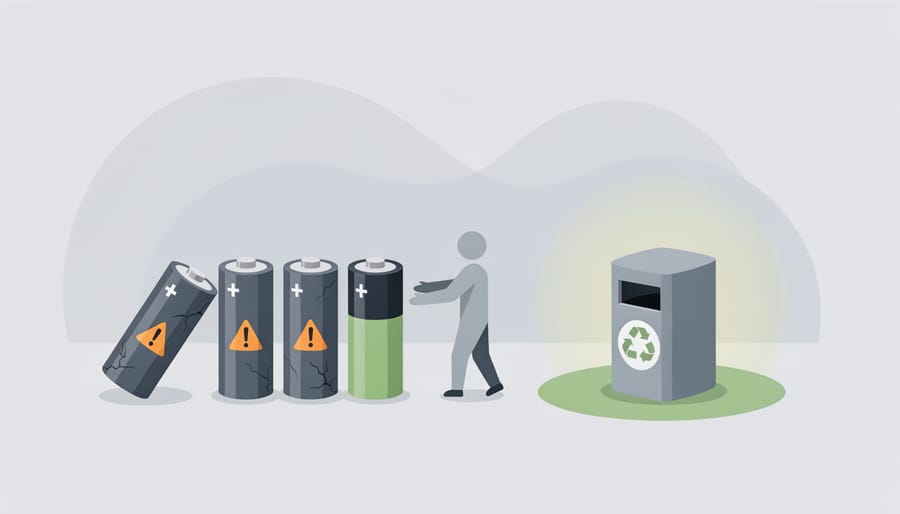
Knowing when to permanently retire an 18650 battery prevents safety incidents that repair cannot fix. Replace any battery immediately if you observe swelling, severe denting, or exposed metal where the wrapper has torn beyond the insulator ring. These conditions create direct short-circuit paths that rewrapping won’t eliminate.
Capacity loss provides a quantifiable retirement threshold. When a battery delivers less than 80% of its rated capacity, measured with a proper analyzer, internal degradation has progressed enough to compromise both performance and safety margins. Most quality 18650 cells reach this point between 300 and 500 charge cycles, though aggressive use accelerates decline.
Age alone warrants replacement after two to three years of regular use, even if the battery appears functional. Internal resistance increases over time regardless of visible condition, raising heat generation during high-drain vaping.
If your device repeatedly displays low-battery warnings despite full charges, or if the cell feels noticeably warmer than it did when new during identical use, retire it. Don’t attempt to “use up” a questionable battery. Proper disposal through battery recycling programs, available at most electronics retailers and municipal facilities, ensures both safety and environmental responsibility.
Understanding why 18650 cells fail starts with their chemistry. These batteries use lithium-ion technology, where lithium ions move between a graphite anode and a metal oxide cathode through an electrolyte solution. During discharge, ions flow from anode to cathode, releasing energy. When charging, the process reverses. This movement is highly efficient but inherently unstable if conditions aren’t controlled, heat, overcharge, or physical damage can trigger cascading chemical reactions that lead to catastrophic failure.
The key difference between protected and unprotected 18650 cells lies in their built-in safety features. Protected cells include a small circuit board at the positive terminal that monitors voltage, current, and temperature. If parameters exceed safe limits, say, voltage drops below 2.5V or charging current spikes, the circuit disconnects the battery. Unprotected cells, common in high-drain vaping applications, lack this circuitry. They’re lighter, handle higher currents, and fit more devices, but place full responsibility for safety on the user and the device’s own protections.
Thermal runaway represents the worst-case scenario. When internal temperature exceeds roughly 80-90°C, the electrolyte begins breaking down, releasing heat and flammable gases. The separator membrane, a thin film keeping anode and cathode apart, starts to melt around 130°C, allowing direct contact and an internal short. This creates a runaway chain reaction. Physical damage, overcharging beyond 4.25V, or excessive current draw can all initiate this process, which is why prevention focuses on avoiding these triggers altogether.
Counterfeit 18650 batteries remain a significant safety risk in 2026, often mimicking legitimate brands with inflated capacity ratings and substandard construction. Purchase only from established specialty battery retailers and authorized distributors, avoid marketplace platforms where third-party sellers lack accountability. Authentic Samsung, Sony, LG, and Molicel cells come with verification codes you can check on the manufacturer’s website; scratch the label coating to reveal the code and enter it before first use.
Examine the cell wrapper closely. Genuine batteries display crisp, aligned printing with correct model numbers and consistent branding. Counterfeits show blurred text, misspellings, or misaligned graphics. Be skeptical of capacity claims exceeding 3500mAh for 18650 cells, legitimate high-drain batteries rarely surpass this threshold, while counterfeit listings often advertise impossible ratings like 5000mAh or higher.
Reputable vendors provide datasheets showing continuous discharge ratings (CDR) and test their inventory. They won’t sell rewrapped cells without disclosure. If pricing seems unusually low or the vendor can’t verify supply chain authenticity, source elsewhere. Your safety depends on the cell’s genuine construction and chemistry.
Never carry loose 18650 batteries in pockets or bags where they might contact keys, coins, or other metal objects. Even a brief connection between positive and negative terminals creates a dead short that can rapidly heat the battery to dangerous temperatures. Store batteries in dedicated silicone or plastic cases with individual slots that prevent contact.
When inserting batteries into devices, check that polarity matches the markings and that wrapper condition hasn’t deteriorated. Install batteries carefully to avoid scraping terminals against metal contacts. For dual-battery mods, always use “married” pairs, two cells purchased together, charged together, and rotated in the same positions throughout their lifespan. This practice maintains balanced discharge rates and prevents one cell from over-stressing.
Keep batteries away from direct sunlight, car interiors, and heat sources. Ideal storage temperature sits between 15-25°C. If storing batteries long-term, maintain them at 40-60% charge rather than fully charged or depleted, which accelerates degradation.
Check wrappers before each use. The thin plastic shrink-wrap is your only insulation against shorts on the battery body. Replace damaged wraps immediately rather than continuing to use compromised cells.
Select a dedicated lithium-ion charger with individual cell monitoring, never charge 18650 cells through the device itself or use generic USB adapters. Quality chargers from Nitecore, XTAR, or Efest display real-time voltage and current for each bay, letting you spot irregularities immediately. Set charging current to 0.5A for cells rated under 2500mAh and 1A for higher-capacity batteries; slower charging reduces heat stress and extends cycle life.
Charge batteries on a non-flammable surface away from bedding, carpets, or clutter, and stay within earshot during the session. Check cells every 30 minutes, batteries that feel noticeably hotter than others or show voltage discrepancies beyond 0.1V may indicate internal damage. Remove cells promptly once the charger signals completion; leaving them on trickle charge for hours degrades chemistry faster.
For paired batteries used in multi-cell mods, always charge and discharge them together as a married set. Label pairs with matching numbers and track their cycle count in a simple log, a notebook entry or phone note listing purchase date, cycles completed, and any charging anomalies creates an audit trail that flags aging cells before they fail.
The jump from 18650 to 21700 cells represents more than a size upgrade, it’s a meaningful shift in safety margins and thermal performance that many vapers overlook. While 18650s remain the industry standard and work reliably when handled correctly, 21700 cells offer tangible advantages for users who push their devices hard or want extra headroom against overheating.
The most significant safety benefit comes from increased thermal mass. A 21700 cell is roughly 50% larger by volume than an 18650, which means more material to absorb and dissipate heat during high-drain use. This translates to lower operating temperatures under identical loads, typically 5-10°C cooler in real-world testing. For vapers who chain-vape or run sub-ohm setups, that temperature difference reduces stress on the cell’s internal chemistry and lowers the risk of thermal runaway.
Capacity differences matter for safety, not just runtime. A 3,000mAh 21700 experiences less strain per draw than a 2,500mAh 18650 at the same wattage, because each discharge cycle taps a smaller percentage of total capacity. This gentler cycling extends cell life and reduces the likelihood of voltage sag or overheating during extended sessions.
Key practical differences between the two formats include:
– 21700 cells deliver 20-40% higher capacity, reducing discharge rate stress per session
– Larger cell body dissipates heat more effectively, lowering peak operating temperatures
– Newer 21700 production often incorporates improved cathode chemistry and safety vents
– Device compatibility remains limited, most older mods accept only 18650s without adapters
– Cost per cell runs 30-50% higher for quality 21700s as of 2026
Before switching formats, verify your device explicitly supports 21700 cells. Using adapters or forcing oversized batteries into 18650 bays creates new risks, contact pressure issues, poor alignment, and potential wrapper damage, that negate the safety gains. If your mod accommodates both natively, 21700s offer a modest but real improvement in thermal headroom. If you’re locked into 18650s, following proper handling and charging protocols matters far more than cell size.
Quality 18650 cells generally last 300-500 full charge cycles before capacity drops below 80%, which translates to roughly 1-2 years for daily vapers. However, batteries subjected to high-drain use, temperature extremes, or improper charging may degrade faster and require earlier replacement regardless of age.
Yes, but only in carry-on luggage with strict limitations: batteries must be in original packaging or protective cases preventing terminal contact, and most airlines limit passengers to 2-4 spare batteries depending on watt-hours. Never pack loose batteries in checked baggage, as cargo hold conditions create fire risks, and always verify current airline policies and relevant vaping laws for your departure and destination locations before travel.
Immediately stop using the device and remove the battery once it’s safe to handle, allowing it to cool in a non-flammable location away from other batteries. Mild warmth is normal under load, but if a battery becomes uncomfortably hot to touch, shows performance issues afterward, or repeatedly overheats during typical use, retire it permanently rather than risk thermal runaway.
That’s the insulator ring, a critical safety component that prevents the positive terminal from contacting the device body and causing a short circuit. If this ring is damaged, missing, or pushed down below the terminal surface, the battery is unsafe to use and requires either a replacement insulator or complete battery retirement, as even minor insulator damage creates serious short-circuit potential.
These questions reflect the real-world concerns vapers encounter when managing battery safety. Beyond the scenarios above, remember that proper disposal matters just as much as proper use. Most electronics retailers and battery specialty stores offer recycling programs specifically for lithium-ion cells, and some jurisdictions require recycling rather than trash disposal. Never throw damaged or depleted 18650s in household garbage, where they can puncture and ignite in compactor trucks.
The question of whether cheap batteries justify their lower price has a clear answer: they don’t. Counterfeit or budget cells often lack the internal protection circuits, quality cathode materials, and manufacturing standards that prevent catastrophic failures. The few dollars saved purchasing questionable batteries creates risks worth hundreds or thousands in potential property damage, medical bills, or device replacement costs. Authentic cells from established manufacturers like Samsung, Sony, LG, and Molicel cost marginally more but deliver predictable performance and genuine safety features.
Using phone chargers or other non-dedicated charging equipment for 18650s is unsafe regardless of connector compatibility. USB wall adapters and cable-only charging in unregulated devices lack the voltage monitoring, cell balancing, and charge termination protocols that proper lithium-ion chargers provide. Even if a makeshift setup appears to work, it overcharges cells, creates uneven charging in multi-battery devices, and dramatically increases fire risk during unattended charging sessions.
Battery safety isn’t just another vaping tip, it’s the foundation of responsible device use. Throughout this guide, we’ve covered the essential framework: recognizing warning signs early, understanding what causes batteries to become unsafe, applying targeted fixes where possible, and building prevention habits that keep problems from developing in the first place.
The troubleshooting approach we’ve outlined gives you a systematic way to assess any battery concern. When you spot wrapper damage, experience charging issues, or notice performance changes, you now have the knowledge to determine whether the battery can be salvaged or needs immediate retirement.
Take thirty minutes this week to audit your current setup. Inspect every battery in your rotation for the visual and performance indicators we’ve discussed. Check your storage methods, review your charging routine, and verify you’re sourcing authentic cells from reputable vendors. Small adjustments to your daily handling practices compound into significant safety improvements over time.
Battery technology continues advancing through 2026, with manufacturers refining chemistry and safety mechanisms. Stay informed about new developments, but remember that fundamental safety principles remain constant: physical integrity, proper charging, appropriate storage, and knowing when to replace aging cells. Your diligence protects both you and those around you.